
The Bureau of Meteorology says the wet season runs from October to April, with the build-up covering roughly October to December and the monsoon typically arriving in late December. It also notes that during the wet season the humidity is constantly above 60 per cent. For a home, that means damp air, damp footwear and damp towels for months at a time. Here is a practical checklist to keep mould and mustiness under control.
Why wet season is harder on your home
Mould needs moisture and still air. Raine & Horne Darwin notes that wet weather and humidity in the Top End create ideal conditions for mould growth, and that some moulds can be dangerous to health. The good news is that regular cleaning and good airflow handle most of it.
The checklist
Bathrooms
- Open a window or switch on the exhaust fan when you shower, and close the bathroom door so the steam stays put.
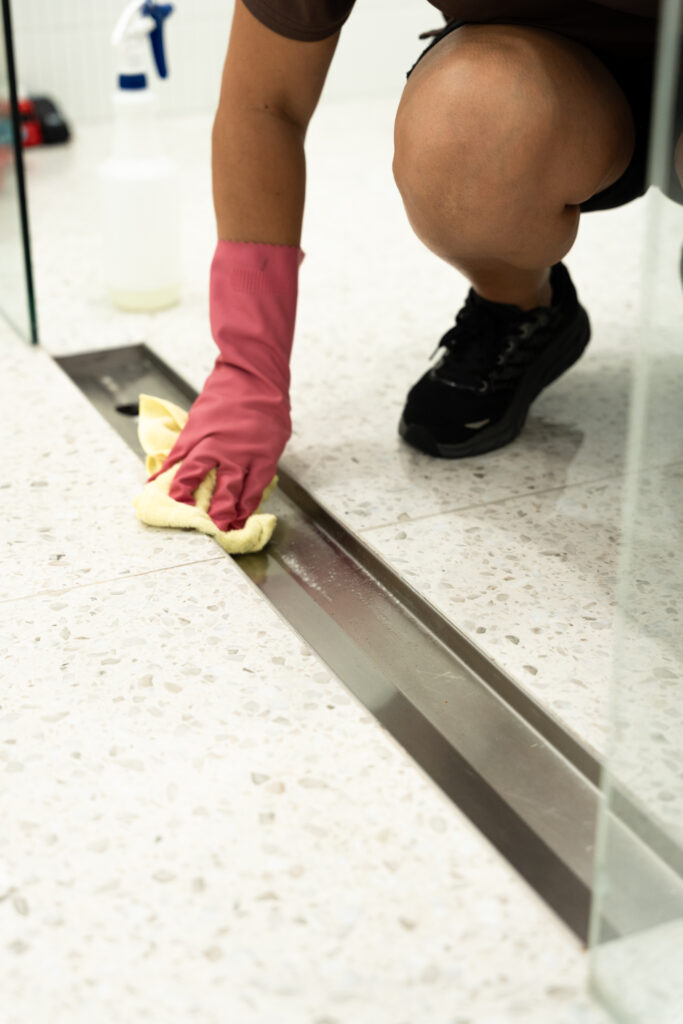
- Wipe down shower screens, tile grout and silicone weekly. These are the first places mould shows up.
- Hang towels so they dry fully between uses, and wash bath mats often.
Kitchen and laundry
- Wipe splashbacks, the sink area and the rubber seal on the fridge door. Our fridge cleaning guide shows how.
- Empty and rinse bins more often. Heat and humidity make bin smells worse (our Bin Sanitisation add-on is $40).
- Do not leave wet washing sitting in the machine, and avoid drying clothes in living areas and bedrooms. If you use a dryer, make sure it is properly ventilated and clean its filter regularly.
- Wipe the washing machine door and leave it ajar after each wash. See five cleaning jobs most people forget.
Bedrooms and wardrobes
- Open wardrobes regularly so clothing can air out.
- Wash bed linen on a regular rotation (see how often to wash your sheets) and keep a fan running when you can.
Windows, doors and floors
- Wipe condensation and dust from window frames and tracks.
- Use doormats at every entry and take wet shoes off at the door. Mop hard floors more often than you would in the dry.
How to deal with small patches of mould
Raine & Horne suggests wiping surface mould with white vinegar diluted at 1 part vinegar to 4 parts water. It also warns that bleach can create toxic fumes and can discolour or stain surfaces before the mould is actually removed. Wear gloves, keep the area ventilated, and dry the surface afterwards.
If mould covers a large area, keeps coming back, or you are not sure what is causing the damp, ask a mould or building specialist, because cleaning alone will not fix a leak. If you rent, treat what you can and tell your property manager as soon as possible.
Where a professional clean helps
A regular visit takes the weekly load off you. The Signature Standard includes detail dusting and high-touch sanitising, and the Ultimate Luxury goes further into the fridge, pantry, microwave and linens. See what each costs in our Darwin price guide.
Want your home Sorted before the storms? Book your clean online or call (08) 8983 3000.
Sources: Bureau of Meteorology: The wet and the dry, seasons in the tropics; Raine & Horne Darwin: Prevent mould in your home this build-up.